Member retention starts with a visible learning loop
A boxing gym does not retain members simply by adding more equipment. Retention is more likely to improve when a member understands what to practise, receives timely feedback and can see progress across comparable sessions. For beginners, that learning loop can break when a coach cannot watch every punch in a busy class or when the member leaves with only a general impression of having trained hard.
Smart boxing gloves and training software can support this loop by recording repeatable events and presenting them for review. They should be introduced as tools inside a coach-led programme, not as a replacement for professional instruction. The business value comes from a clearer member experience and a more consistent coaching workflow that the gym can test and measure.
Three common breaks in the member experience
The following problems often appear in beginner programmes and group classes. Their importance varies by gym, so owners should confirm them through attendance records, coach interviews and member feedback before investing in technology.
- Limited individual feedback: a coach may not be able to review every member's hand, punch type and combination sequence during a large class.
- Progress is difficult to explain: members may train for weeks without a consistent record that helps them compare similar rounds.
- Classes can feel repetitive: bag work without changing targets, cues or review may become physically demanding but mentally predictable.
Scenario one: structured beginner onboarding
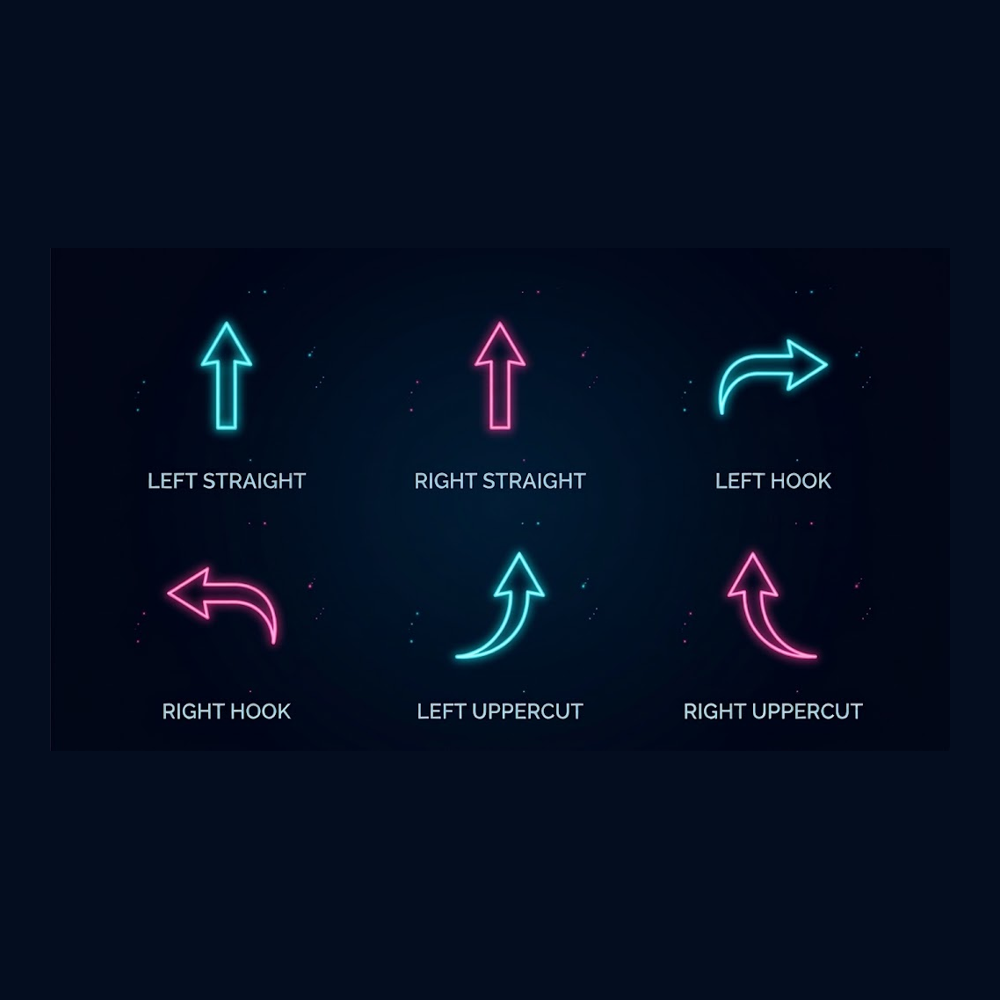
A gym can begin with one clearly defined punch and a short round. With WM-BF and BoxingFitness, the coach selects the left or right hand and one confirmed punch type: Straight, Uppercut or Hook. The member follows the target while the system records the recognized hand and punch type. The coach then compares the record with live observation and decides what to demonstrate or repeat.
This is assisted recognition, not automatic technical correction. The system does not independently judge stance, guard, footwork, balance, distance or injury risk. Its value is to give the coach a repeatable test: run the same setting before and after an adjustment, then review whether recognition and target matching became more consistent.
Scenario two: cue-based combination drills for group classes
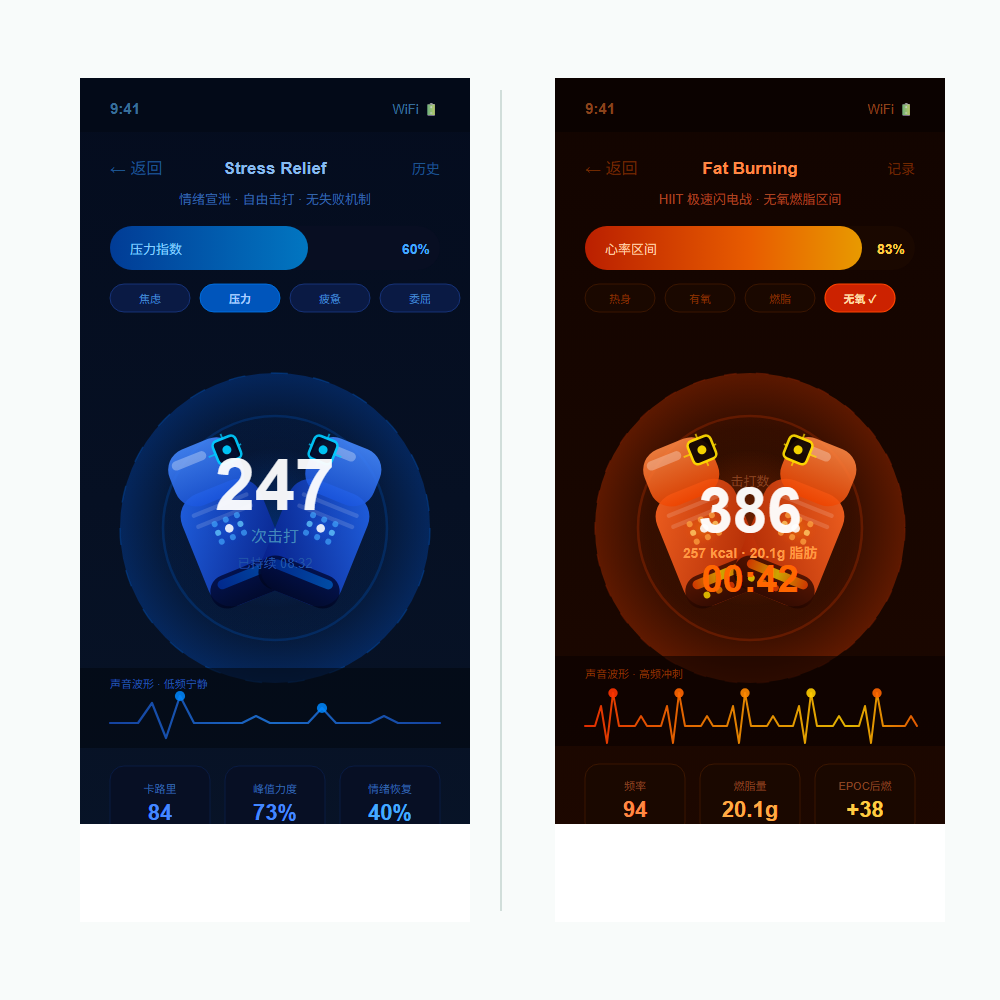
For a group class, the coach can use a fixed two-to-six-punch combination or a familiar sequence such as left Straight, right Straight and left Hook. Members follow on-screen and voice cues while the coach controls tempo, round duration and rest. The session can record complete combinations and first-punch reaction time, giving the coach another way to identify where a sequence loses continuity.
Technology does not remove the need for class management. Gyms still need safe spacing, suitable bags, matched glove sizes, charging procedures and a clear method for assigning devices. A pilot should test the complete operating flow from equipment distribution to post-class storage, not only the app screen.
Scenario three: reports that support member review
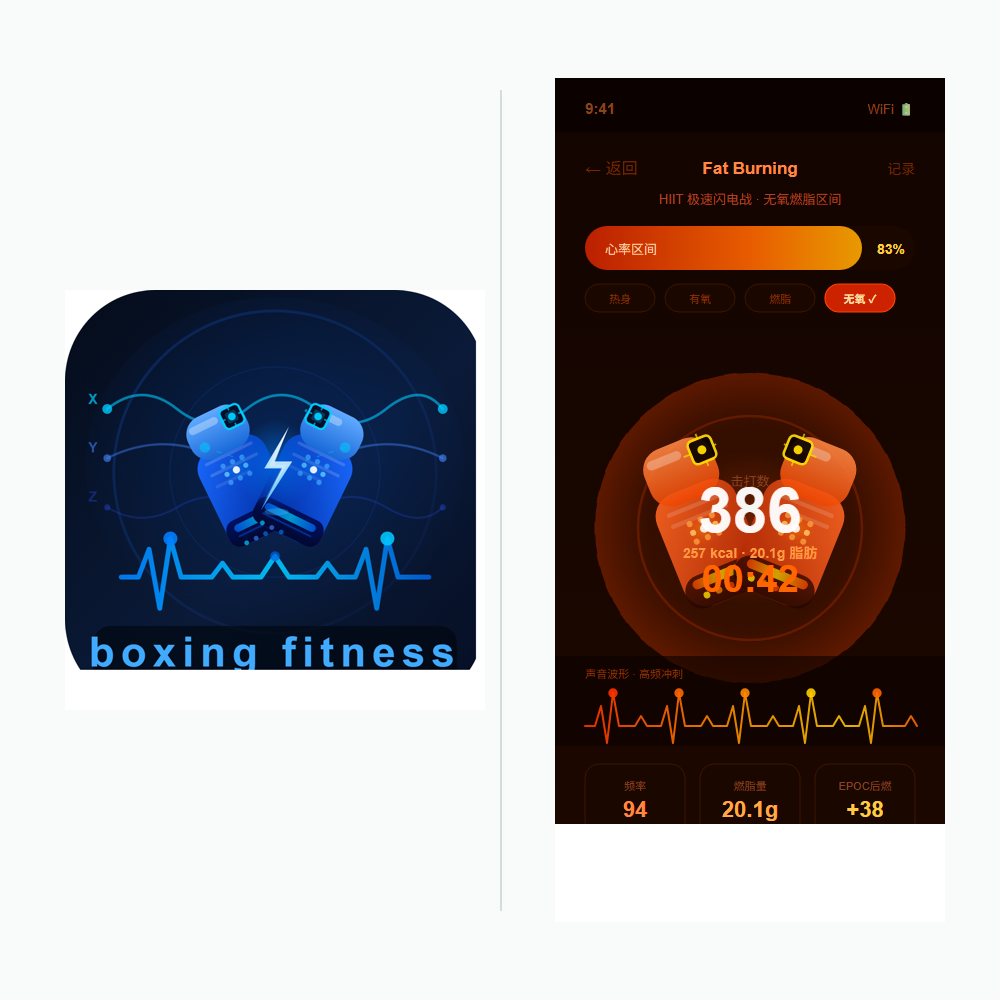
A useful report should lead to a coaching conversation. Instead of showing every available number, select a small set of metrics that match the course objective. A beginner round might focus on target-punch accuracy and complete combinations; a conditioning class might use valid punch count and punches per minute. Compare the same member under similar equipment, sensitivity and round settings.
Reports may also give members a concrete summary to discuss or share, but consent and privacy still matter. Do not publish a member's name, ranking, history or image without permission, and do not design incentives that encourage unsafe punching or misleading comparisons between different devices and conditions.
What WM-BF and BoxingFitness actually measure
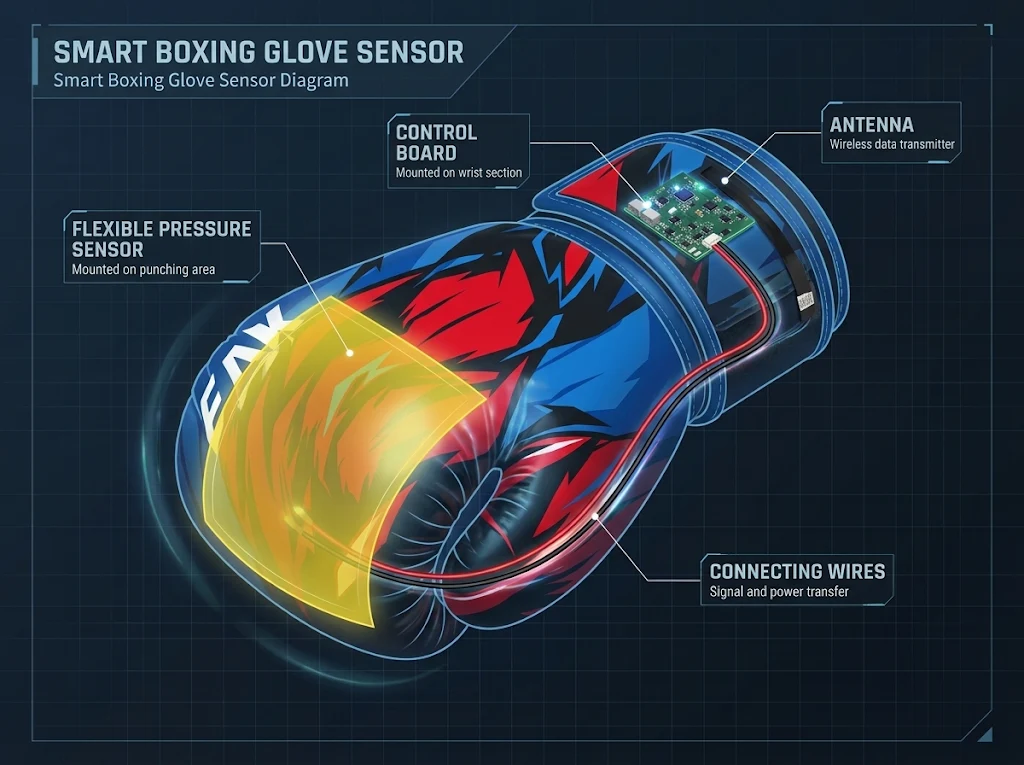
WM-BF uses matched left and right gloves. A flexible pressure sensor records contact response at the striking surface, while an inertial measurement unit captures hand motion. BoxingFitness uses the delivered hardware, firmware and recognition model to distinguish the hand and recognize Straight, Uppercut and Hook. Results depend on the final project configuration, phone, app build, fit and training conditions.
- Punch Force is the calibrated maximum from the flexible Pressure Point 1 sensor within the punch time window and is displayed in kilograms for training feedback.
- Relative Force is a separate relative score derived from IMU motion data; it is not the same quantity as Punch Force.
- Neither value is presented as a certified professional-competition measurement or a medical assessment.
Run a controlled four-to-eight-week pilot
Before a full rollout, select one course, a small member group and a coach who will document the process. Establish a baseline using the current class format, then introduce the smart-glove workflow without changing every other part of the programme at the same time. Consistent conditions make the result easier to interpret.
- Week 0: define the course objective, member group, equipment settings and baseline measures.
- Weeks 1–2: test distribution, pairing, charging, coach controls and member onboarding.
- Weeks 3–6: keep the main workflow stable and collect comparable session and attendance records.
- Weeks 7–8: review coach workload, member feedback, equipment reliability and commercial indicators before deciding whether to expand.
Measure the pilot without promising a retention outcome
Technology can support a retention workflow, but it cannot guarantee renewals. Pricing, coaching quality, location, schedule, community and member goals also affect retention. Compare the pilot group with its own baseline or a reasonably similar class, record other changes and treat the result as operating evidence for that gym rather than a universal claim.
- Trial-to-membership conversion and repeat booking after the first class.
- Attendance, session completion and participation across the pilot period.
- Coach preparation time, device-management time and reported usability problems.
- Member feedback on clarity, motivation and whether reports help them understand progress.
- Renewal or package repurchase when the normal decision point arrives.
Procurement and deployment checklist
A commercial deployment should be evaluated as one system. Confirm the gloves, sensors, firmware, BoxingFitness build, phones, accounts, charging process and coaching rules together. Overseas buyers should also include packaging, labeling, language, target-market testing and after-sales responsibilities in the written project scope.
- Glove sizes, materials, fit, cleaning method and expected class frequency.
- Android and iOS phone models, app version, interface language and account workflow.
- Pairing, charging, storage, inspection, replacement and software-update responsibility.
- Coach training, class rules, metric definitions and data-privacy procedures.
- OEM or ODM requirements for branding, packaging, software and the intended market.
Turn one real class into a measurable demonstration
The most useful demonstration is based on a class the gym already teaches. Bring one beginner drill or combination, define what the coach wants to observe and run it with WM-BF and BoxingFitness. Review recognition, reporting, equipment handling and class fit before discussing a larger project. That process gives both the gym and supplier a clearer basis for configuration and quotation.
Plan a measurable smart-boxing pilot for your gym
Bring one real class plan and evaluate recognition, reporting, equipment handling and commercial fit before a larger rollout.
Request a demonstration