Keep the supply stable during radio bursts
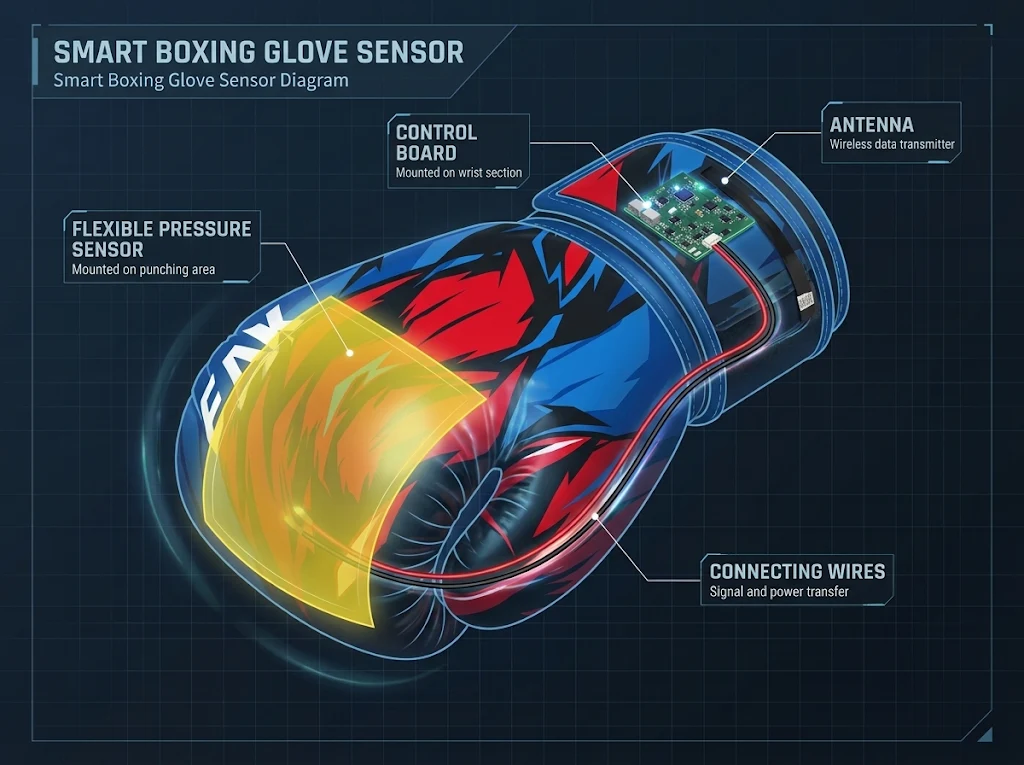
A compact battery must fit without creating a hard spot, yet the full board can draw brief current peaks above 20 mA during sensing and radio activity. Measure peak current and the minimum supply voltage at full and lower charge while both gloves stream.
A low-ESR reservoir capacitor can support short bursts, but its value must be selected from pulse duration and permitted voltage drop, then verified under the same high-load test. Component choice alone is not proof of connection stability.
Tune and test the antenna in the finished glove
Padding, leather, the battery and the wearer's hand can detune a 2.4 GHz antenna. Measure input impedance and reflection with a vector network analyzer in a representative assembled and worn condition, then adjust the matching network against the RF design reference.
After bench tuning, verify real two-glove data streaming. A project target such as stronger than -60 dBm at about one meter and stable operation beyond 30 meters must remain identified as a target until recorded test results support the released configuration.
Monitor fresh data not only the link icon
A connected icon does not prove that both hands are still sending fresh samples. Maintain a freshness timer for each glove. If one side disconnects, fails to reconnect or stops delivering new sequence numbers, show the affected hand and turn the overall status red.
Automatic retries should preserve the healthy glove's stream and restore data subscription only to the expected device identity. Recovery performance should be described with measured median and worst-case time, not only with the word instant.
Need a traceable validation plan for your project?
Tell us the target configuration, firmware and acceptance criteria. We can align test records with your OEM or ODM project.
Discuss a validation project