What the glove records every 1.25 milliseconds
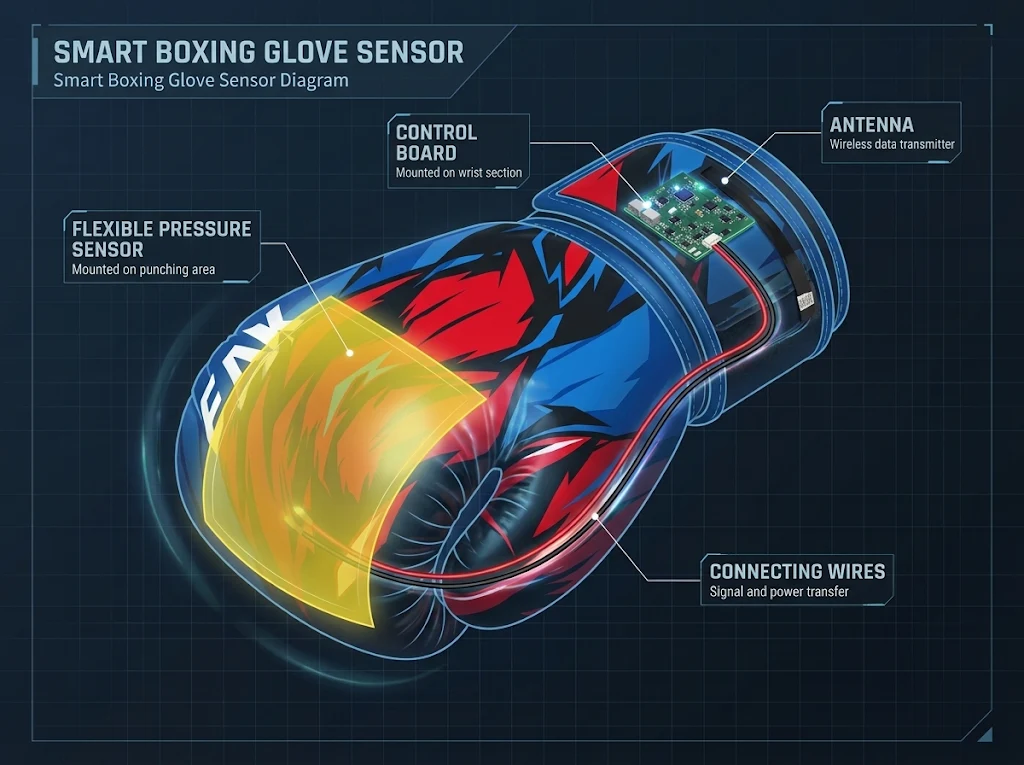
The inertial measurement unit records three-axis acceleration and three-axis angular velocity. A flexible sensor in the striking surface records pressure at the same time. At 800 Hz, the glove creates one synchronized sample set every 1.25 milliseconds.
The 800 Hz figure describes sensing inside the glove. Bluetooth packets may contain several sample sets, so validation should rely on sample timestamps and sequence continuity rather than assuming that the phone receives 800 separate packets each second.
Set the threshold from background pressure and light taps
First record the pressure while the boxer is wearing the glove without hitting the bag. This captures offsets and fluctuations caused by closing the hand, lining compression and glove fit. Then collect controlled light taps on the intended sensing area and use them as a measured reference for the hit threshold.
A clear motion in the IMU data is not enough to confirm a hit. If pressure stays below the threshold, an air swing should not start contact peak tracking.
Turn several pressure samples into one valid punch
The first sample above the threshold flags a possible contact. The app follows later samples from that same contact, updates the highest calibrated pressure and its timestamp, and confirms one valid punch when the peak is established. Multiple above-threshold samples from the same contact still produce one event.
The peak timestamp becomes the hit time. The preceding 500 milliseconds of IMU data can then be retained for punch-type recognition and motion-path analysis, while the calibrated pressure peak can support punch-force feedback.
Need a traceable validation plan for your project?
Tell us the target configuration, firmware and acceptance criteria. We can align test records with your OEM or ODM project.
Discuss a validation project