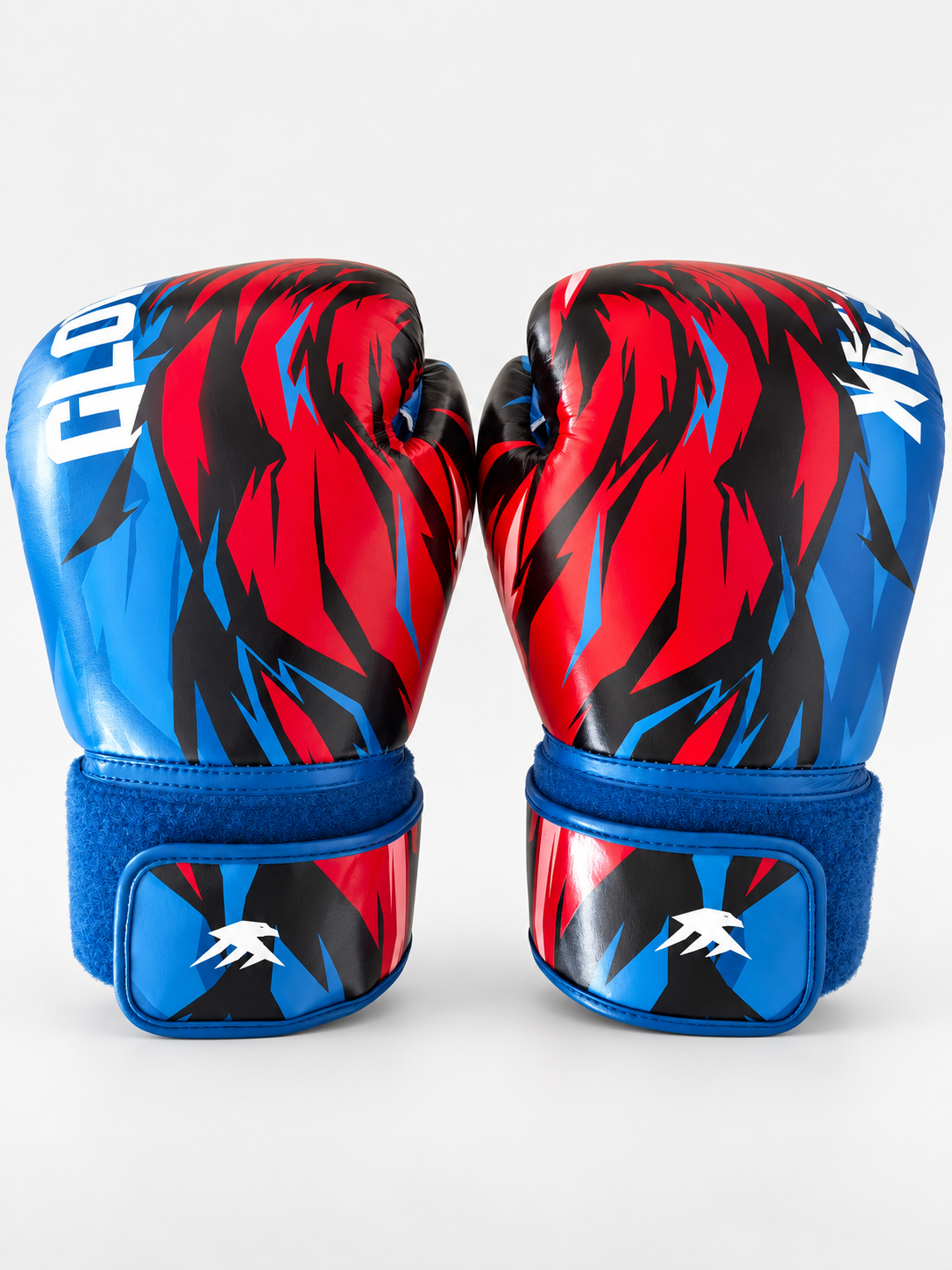
Start with the pause inside a combination
A student may throw a left Hook smoothly in isolation, then pause before the third punch when the coach calls “left Straight, right Straight, left Hook.” The problem may not be the Hook itself. It may be the transition from the right Straight into the left Hook. One observation rarely tells the coach whether the pause was accidental, caused by a slow response to the cue or produced by an unstable transition.
With wavemill WM-BF Smart Boxing Gloves, the coach can first test the punch in a single-punch round and then place it back into the original combination. The companion wavemill BoxingFitness App records the hand, punch type, sequence and result. Reviewing both rounds alongside the coach’s live observation helps decide whether to continue isolated practice or work specifically on the transition between two punches.
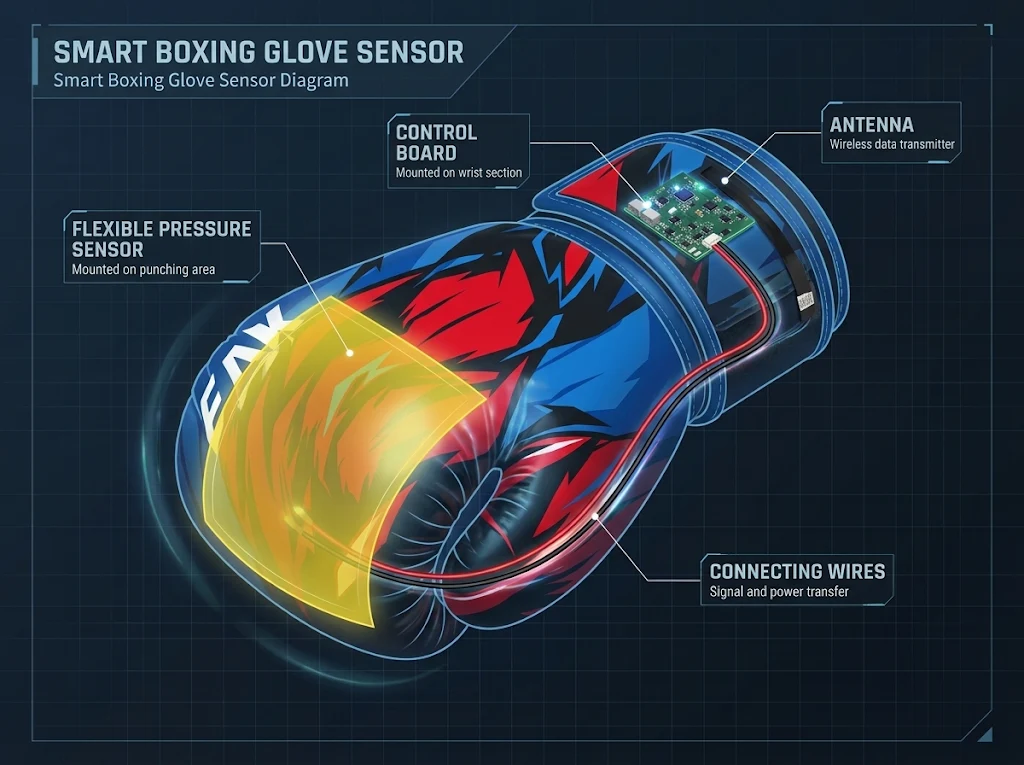
How smart boxing gloves turn punches into training data
WM-BF consists of a matched left and right smart boxing glove. A flexible pressure sensor in each striking surface records pressure changes when the glove contacts the bag, while an inertial measurement unit (IMU) captures hand motion. Data is transmitted to the phone over Bluetooth Low Energy. Using the recognition model supplied with the delivered system, BoxingFitness distinguishes the left and right hand and recognizes Straight, Uppercut and Hook punches.
In Single Punch Training, the system checks the recognized result against the target shown on screen. In Combination Training, it must identify the timing, type and order of each punch in a continuous sequence. This data can show which punch did not match the target, but it cannot by itself prove that the technique was correct. Stance, balance, footwork, punch path and recovery still require direct observation by a qualified coach.
Use single-punch training to isolate what needs observation
For a left Hook, the coach can select the left hand and Hook, then set the practice duration. The student follows the target on screen, and the system reports whether the recognized hand and punch type match that target. Across a short set of rounds, the coach can see whether the same punch is recognized consistently.
How can AI recognition help a coach locate a problem? If several left Hooks are recognized as left Straights, the answer is not simply to make the student punch harder. The coach should move to the student’s side and inspect the punch path, range of motion and recovery. After a demonstration and adjustment, repeat the same settings and compare target-punch accuracy and the number of consecutive correct results. The value comes from putting what the coach observed and what the system recognized into the same repeatable test.
Use combination training to find the transition that needs work
A gym can configure a familiar three-punch sequence such as “left Straight, right Straight, left Hook,” select a preset or save a custom combination of two to six punches. After the coach sets tempo, round duration and rest, the student follows the on-screen and voice cues while striking the bag.
At the end of the round, review single-punch accuracy and complete-combination rate together. Single-punch accuracy asks how many individual punches matched their targets. Complete-combination rate asks how many full sequences were completed in the required order. A student can have strong recognition on individual punches and still hesitate or change the order inside a combination.
If the student repeatedly hesitates between the second and third punches, isolate those two punches at a slower tempo. Once the transition stabilizes, return to the original three-punch combination and tempo. The data is not a label of “good” or “bad”; it helps reduce a broad problem to a specific segment that can be practised directly.
Use Free Technique to observe choices without a prescribed sequence
Single-punch and combination modes provide explicit targets. Free Technique sets only the round time and lets the student choose the punches and sequence. BoxingFitness can display the recognized hand and punch type during the round, then summarize punch-type distribution, punches per minute and uncertain classifications.
Before opening the report, ask the student which punch they believe they used most and compare that answer with the record. If the student intended to focus on Hooks but the report shows mostly Straights, the next round has a clear objective. An uncertain punch is not automatically an incorrect technique; it means the current model did not classify that strike with sufficient confidence. The coach must still consider the live movement and sensor conditions.
Bring training data into everyday gym sessions
For a new-member trial, start with Single Punch Training so the student understands the relationship between the left and right hands, punch types and on-screen targets. The priority is not a high punch count. It is a successful connection, understandable recognition and one short round that can be repeated.
In a private lesson, save the coach’s regular combinations and compare a before-and-after round using the same tempo, duration and rest. This comparison is easier to explain than comparing the highest number from two unrelated sessions because the conditions are more consistent.
In a small-group class, prepare one combination at a bag station, rotate students through short rounds and coach them individually between rounds. If results are compared across students, standardize glove size and fit, sensitivity, app version, training time and bag conditions as far as practical. Otherwise, equipment differences may be mistaken for student differences.
How to interpret common training metrics
- Single-punch accuracy: the percentage of recognized punches whose hand and type match the current target. Use it to review one punch or one position inside a combination.
- Complete-combination rate: the percentage of full sequences completed in the required order. It evaluates order and transitions and is not the same metric as single-punch accuracy.
- First-punch reaction time: the interval between the target or cue and the first valid strike. Use it to track the same student under the same settings.
- Punch Force: the calibrated maximum value from the flexible Pressure Point 1 sensor inside the punch time window, displayed in kilograms. It is training feedback for a defined device and calibration condition, not a certified measurement for professional competition.
- Relative Force: a separate relative score calculated from IMU motion data. It is not the same quantity as the pressure-sensor Punch Force value.
- Uncertain punches: strikes that the current model cannot classify with sufficient confidence. The number can prompt a review of technique, glove fit, sensitivity and sensor status, but it should not be treated as a direct count of technical errors.
The limits of AI feedback
Smart boxing gloves and BoxingFitness can record strikes, check targets and compare the same student across similar training conditions. They do not replace professional judgement about stance, guard, footwork, balance, distance or injury risk, and they should not be used for medical diagnosis or professional competition decisions.
The most meaningful comparison uses the same gloves, the same bag, similar settings and the same app version to review one student before and after an adjustment. Before comparing across devices, venues or software versions, confirm glove fit, sensor position, sensitivity, calibration and training rules.
Move from a product demonstration to a gym programme
When evaluating smart boxing gloves, do not rely only on the punch count or force number from one demonstration. Bring a familiar coaching sequence and complete a full workflow under consistent settings: single-punch check, combination training, Free Technique and result review. Then decide which data supports the gym’s existing programme.
Before a formal rollout, boxing clubs, gyms, brands and project teams should confirm glove size and materials, sensor integration, charging design, the BoxingFitness version, supported phones and languages, data handling, software-update responsibility and long-term maintenance. Training data gains a stable meaning only when the hardware, software and coaching rules are defined together.
Request a product demonstration
Boxing clubs, gyms, coaches and overseas brand project teams are welcome to contact wavemill for a WM-BF Smart Boxing Gloves and BoxingFitness demonstration. Bring a punch or combination you regularly teach, complete one real training round and evaluate whether the recognition, reports and coaching workflow fit your intended use.
Evaluate WM-BF in a real coaching workflow
Bring a punch or combination you regularly teach and review recognition, reports and course fit in one demonstration.
Request a demonstration