Short answer
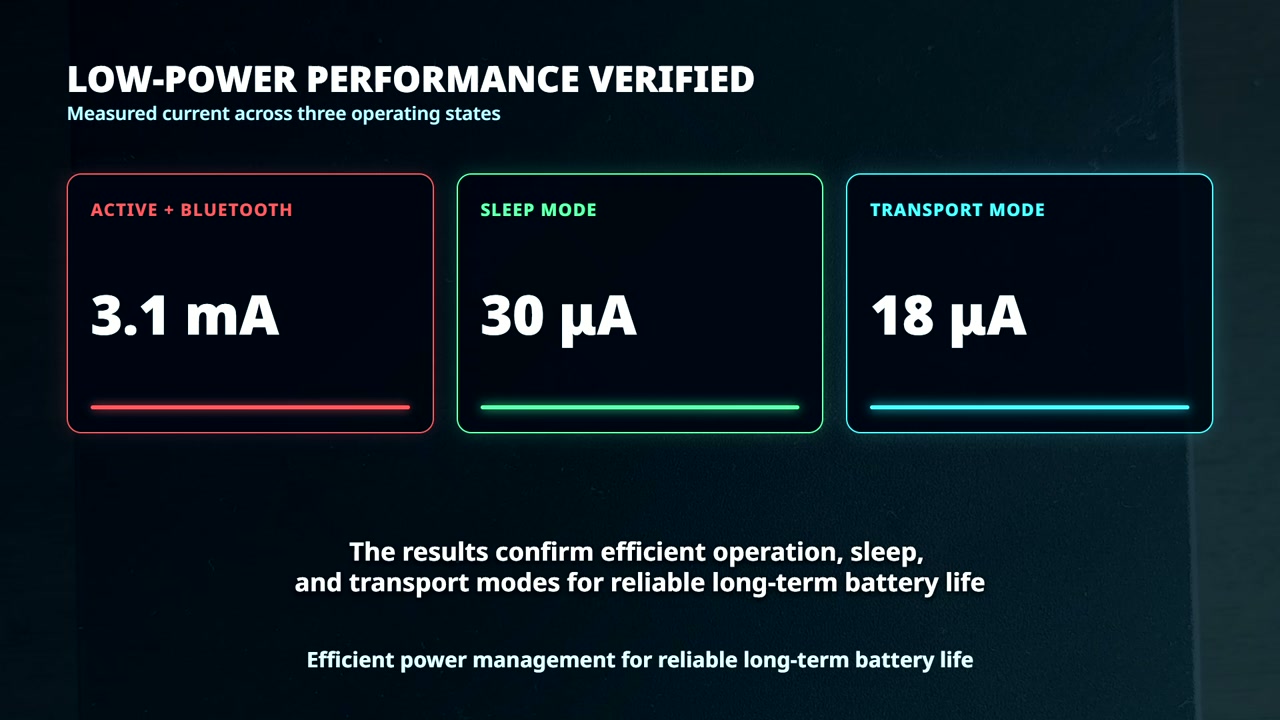
A design that supports transport mode can often use less power than ordinary sleep because it may turn off more peripherals, reduce wake conditions or isolate the battery from the main system. The actual reduction must be measured under the same boundary and conditions. The mode name alone does not prove a current value or confirm that a particular product implements it.
Why ordinary sleep keeps some functions alive
Daily sleep balances energy saving with convenient recovery. A smart boxing glove that wakes when moved must keep a motion-detection path, wake input or selected power domain alive even when the main processor pauses most work.
Shipping and warehousing have different priorities. A boxed device can be stored for a long time and experience repeated vibration, so reacting to every movement may be unnecessary or harmful to shelf life.
How transport mode can reduce consumption
Both ordinary sleep and transport mode may stop advertising. Their real difference is which circuits remain powered and which events are allowed to wake the device.
- Stop high-rate sampling, gyroscope operation, Bluetooth advertising, displays and other nonessential outputs.
- Reduce scheduled wake-ups, background tasks and retained detection paths in the controller.
- Use a power-path or ship-mode switch to isolate the battery from more of the main system where the hardware supports it.
Wake-up behavior and zero-power misconceptions
If transport mode removes power from the IMU used for motion wake-up, movement can no longer activate the device unless a separate wake circuit remains. A charger connection is a common exit method, but the delivered model's instructions must define the actual procedure.
Transport mode is not zero power. Battery protection, charging-management retention circuits and designated wake inputs may still draw current, while the battery itself continues to self-discharge. A nanoamp chip specification cannot be used to predict years of whole-product storage.
How to verify the mode
On the same complete sample, fix firmware, temperature and battery-side voltage, then record ordinary-sleep and transport-mode average current over windows long enough to include periodic activity. Confirm state entry rather than relying only on a successful command response.
Repeat realistic packing and handling motion to check for unintended wake-up. Then activate the unit using the documented method and verify Bluetooth discovery, connection, sensor data and retained settings. Low current and reliable recovery must both pass.
Frequently asked questions
- Is transport mode only advertising off? No. It can also disable sensors, deepen controller sleep or isolate power domains.
- Is it always much lower than normal sleep? Not necessarily. It is expected to be lower only when the design disables additional loads, and the difference must be measured.
References
Need a traceable validation plan for your project?
Tell us the target configuration, firmware and acceptance criteria. We can align test records with your OEM or ODM project.
Discuss a validation project